

In our previous 2026 AI Map article, we grouped the AI tools ecosystem into five main categories. In this series, we are opening up the most important stops on that map one by one.
The first stop is LangGraph. In agentic systems, tool selection often determines not only developer experience, but also reliability in production.
LangGraph, CrewAI, AG2, and BeeAI do not solve the same problem. Missing that distinction can turn a framework decision into future cost around testing, error handling, and maintenance.
The Question to Ask Before Choosing a Framework
When teams start building an agentic system, the first question is usually: "Which framework should we use?"
We think that question often comes too early. A better first question is: "What will this system do, when will it do it, and what happens if something goes wrong?"
If the system only performs research, produces drafts, or runs as an internal experiment, flexibility can be valuable. But if it writes to a CRM, talks to a payment system, sends emails, or touches customer data, the situation changes.
At that point, what you need is not only an intelligent agent. You need a controllable workflow. That is where LangGraph becomes useful.
What Is LangGraph?
LangGraph is an open-source Python framework developed by the LangChain team. It lets you model agent systems as directed graphs.
In many traditional agent approaches, the flow progresses through conversation. One agent says something, another responds, and the process continues. LangGraph treats the system as a state machine.
Each step reads and updates a shared state object. Transitions between steps are defined in advance. Those transitions can also be conditional.
The result is a structure that is easier to test, observe, and predict in production.
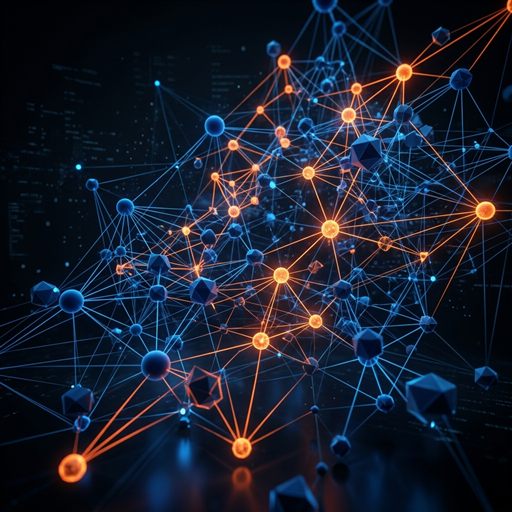
Core Structure: Node, Edge, and State
Three concepts are enough to understand LangGraph: node, edge, and state.
Node: Each operation step in the system. Getting user input, fetching data, validating information, or generating a report can each be a node.
Edge: The transition between nodes. It defines which step runs after another step finishes. With conditional edges, the flow can take different paths depending on the state.
State: The shared data object read and updated by all nodes. The current state of the system lives here.
A simple example:
from langgraph.graph import StateGraph, END
from typing import TypedDict

class AgentState(TypedDict):
    input: str
    data: str
    report: str

def fetch_data(state: AgentState):
    return {"data": f"Processed: {state['input']}"}

def write_report(state: AgentState):
    return {"report": f"Report complete: {state['data']}"}

def decide(state: AgentState):
    if state.get("data"):
        return "write_report"
    return END

graph = StateGraph(AgentState)
graph.add_node("fetch_data", fetch_data)
graph.add_node("write_report", write_report)
graph.add_conditional_edges("fetch_data", decide)
graph.add_edge("write_report", END)
graph.set_entry_point("fetch_data")

app = graph.compile()
Even in this small example, the flow is explicit. If data is fetched, the report is written. If not, the process ends. Each step can be tested separately.
The important difference is that the decision is visible in code. The next step is not left to the interpretation of a conversation loop. The decide function explicitly states which node should run under which condition.

Why It Matters in Production
LangGraph's production value appears in three areas: deterministic flow, error handling, and human approval.
Deterministic flow means this: the same input and the same state follow the same path. That makes testing and debugging easier.
Error handling matters especially when third-party services are involved. For example, customer data was validated and the CRM record was created, but the welcome email failed because of a network issue. LangGraph can keep track of where the process stopped through the state.
That makes it possible to continue from the failed step instead of running everything again from the beginning. In critical business processes, this directly affects operational reliability.
Human approval matters for the same reason. Steps such as deleting data, approving a payment, or publishing content can pause the flow. Once approval arrives, the system continues with the same state.
At Aforsoft, when an agent system touches real users or real data, we ask two questions first: Can the flow be tested? Can human approval be added at critical steps?
Alternatives: CrewAI, AG2, and BeeAI
LangGraph is not the only option. The alternatives need to be positioned correctly.
CrewAI: Works with role-based tasks. It is practical for defining roles such as researcher, writer, or editor and building quick prototypes. It can be enough when the flow is simple.
AG2, formerly AutoGen: Strong in conversation-based multi-agent interaction. It makes sense for research, exploration, and open-ended tasks where agents guide each other.
BeeAI: An orchestration layer that connects different agent frameworks. It becomes useful when multiple frameworks need to work in the same system.
None of these tools are bad. They become expensive when applied to the wrong problem.
LangGraph is strongest in production scenarios where the flow must be defined and observable. CrewAI or AG2 is stronger in more flexible, exploration-oriented tasks.
When Should You Choose LangGraph?
LangGraph is usually a better starting point in these scenarios:
- The system will run in production
- It touches real users or real data
- It needs to continue from where it stopped after an error
- Critical steps require human approval
- The flow must be testable and observable
CrewAI or AG2 may be a lighter starting point in these cases:
- You are building an internal prototype
- The task is open-ended research
- Roles are clear, but flow control is not critical
- Speed matters more than production reliability
The comparison with n8n belongs on a different axis. n8n is better for workflows between services. LangGraph is better for agent decision logic. In many systems, they are not competitors. They sit in different layers.
In the next article, we will look at n8n from that perspective.
What to Check Before Production
Choosing LangGraph is not the end of the work. Production use still requires discipline.
First, version pinning matters. LangGraph is actively developed, and uncontrolled dependency updates can create unexpected breaking changes.
Second, testing matters. Since nodes are separate functions, unit testing is relatively straightforward. Each node can be verified with a specific state.
Third, observability matters. LangSmith can be used, but it is not mandatory. At the beginning, structured logging can track node starts and completions. As the system grows, stronger observability tooling becomes necessary.
FAQ
How long does it take to learn LangGraph?
For someone who knows Python, the learning curve is moderate. Understanding node, edge, and state takes a few focused hours. Using it at production quality also requires discipline around testing and observability.
How should you decide between LangGraph and n8n?
n8n is suitable for service integration and visual workflows. LangGraph is more suitable when you need to control which step an agent moves to under which condition. One is an integration layer, the other is a decision-flow layer.
Is LangGraph free?
LangGraph is open source and can be used as a framework for free. Monitoring tools such as LangSmith may have separate paid tiers.
Can you build a production agent system without LangGraph?
Yes. But deterministic flow, error handling, checkpoint logic, and human approval need to be designed separately. LangGraph provides a strong starting point for building those structures in a more organized way.
Conclusion: Tool Selection Is an Architectural Decision
Seeing LangGraph only as a new AI framework would be incomplete. Its real value is turning agent systems into controllable workflows.
At Aforsoft, when building an agent system for production, we start with this question: "Will this system touch real users or real data?"
If the answer is yes, LangGraph becomes a strong candidate. At that point, what matters is not only whether the agent can produce an answer, but whether the process is observable, testable, and stoppable when needed.
In the next article, we will look at n8n in the same decision map: when a visual workflow is enough, and when a framework like LangGraph becomes necessary.




Make a Comment